
Griffin Kaye
In the UK, the British wrestling industry had an unthinkable level of fame and popularity during the halcyon days of World of Sport wrestling on ITV. Thought to have attracted viewers beyond eight figures, many of the stars of the day are still to this day the most memorable names amongst the British public.
That said, here are 10 interesting facts about some of the biggest British wrestling icons of the late 20th century.
Big Daddy: A Splash of Colour

Ask any middle aged or older member of the British public to name a wrestler, and more than likely they’ll reply with the name Big Daddy. What he may have lacked in wrestling ability was made up for in blue-eyed charm and whimsy.
However, in 1987, the usually chipper Big Daddy was left stunned after an opponent he just performed his signature splash on did not get up.
Competing in August 1987 at the Hippodrome in Great Yarmouth, Norfolk, Daddy was teaming with brother Steve (billed as Greg Valentine) against King Kendo and King Kong Kirk.
Kirk was crushed under the 24 stone (336 lbs) Daddy as 2,000 fans watched on. Afterwards, he was reported to have turned a strange colour.
Despite the efforts of paramedics, Kirk was pronounced dead, with eight men needing to lift him into an ambulance.
The Halifax-born superheavyweight was later ruled not for Kirk’s death due to Kirk having an underlying heart condition.
The death haunted the real-life Shirley Crabtree, who remarked: “as long as I’ll live I’ll never forget seeing him laid down there on the canvas instead of on his feet…that will stay with me.”
Giant Haystacks: With A Little Help from My Friends

It is well-known that various celebrities were professional wrestling fans, from the Queen to Margaret Thatcher to Frank Sinatra.
One celebrity who became close friends with a wrestler was ex-Beatle Paul McCartney. Despite his public image as a snarling brute, Giant Haystacks was the man who became allies with the Beatles-turned-Wings frontman.
It was an odd pairing; one was one of the top entertainers in the country…and the other was Paul McCartney!
Haystacks reflected that “[Paul] used to watch the wrestling regularly. He came to see me many times when I wrestled in Sussex. He used to bring his son and when we were in London he would take my lad Martin into town playing the pinball machines.”
In 1984, McCartney cast Haystacks in his musical-drama film Give My Regards to Broad Street.
Heart-warmingly, the friendship was one of Haystacks’s proudest accomplishments, with fellow wrestler Robbie Brookside noting how he would often spend up to an hour talking about how the two met.
Haystacks’s son would later comment that Paul had a guitar specially made for his father, and would send flowers to his wife years after his death.
Kendo Nagasaki: Leaking Information

British wrestling’s most memorable gimmick was Kendo Nagasaki. Billed as Japanese and never showing his face, the mysterious masked man had his identity first leaked in the late 1970s.
One day, there was a leak in a house shared by manager “Gorgeous” George Gillette and Nagasaki so the former called a plumber from the Yellow Pages.
A wrestling fan, he recognised Gillette and realised the other man in the house must be Nagasaki, without a mask reading a newspaper. The perspicacious plumber then notices he has the real name of Nagasaki as Peter Thornley, the name used to pay the bill.
Knowing that wrestling was promoted in the local Express and Star paper, he buys out an ad beneath a promotional feature reading: “Please note, the above wrestler is Peter Thornley and he lives at this address…”
The promoter Max Crabtree tells the end of the story: “So enough is enough. The plumber ended up in the local magistrates’ court. We’d got his address, and put an injunction on him to stop him from doing it again. The plumber doesn’t turn up at the court. He sends a letter in, and says he’s very sorry, it won’t happen again.”
Mick McManus: Star of the Screen

McManus’s fame came before many other most memorable British grapplers.
“The Man You Love To Hate”’s most famous feud was in the 1960s with “Mr TV” Jackie Pallo whom he wrestled at the Royal Albert Hall on several occasions. One 1963 match is thought to have even had a greater viewership than that year’s FA Cup final.
In his time, he was a huge pop culture figure of the day, photographed with Prince Philip, Harold Wilson, and The Rolling Stones.
His list of television credits is extensive, appearing on programmes such as Celebrity Squares, The Generation Game, and The Morecambe and Wise Show. He too shared the screen with some of TV’s biggest names such as Terry Wogan, Eamonn Andrews, and Tommy Cooper.
He was also a friend of Richard Attenborough, who visited McManus in his last days.
It is also reported he was the most prolific wrestler on British television throughout his lengthy career. Following retirement, he served as a technical advisor to London Weekend Television from 1982 until Director of Programmes Greg Dyke took British wrestling off TV in 1988.
Mark Rocco: WWF Titleholder

Few could muster up such a distinctive look whilst being thoroughly able to back it up in the ring compared to Mark “Rollerball” Rocco.
A ruthless in-ring menace noted for his thick moustache, stars and stripes attire, and large black glove, was famed for his daring in-ring bumps, selling like no other.
He would have greater success in Japan under the Black Tiger guise.
Indeed, it was in this gimmick in 1982 that he picked up a WWF title, even if he would never be signed to a major North American wrestling promotion.
He won the WWF’s Junior Heavyweight belt, a title primarily defended in Japan. The reign was short however as Rocco lost it within the month to Tiger Mask.
Having won a WWF title without being under contract, he would compete at a WWF card in Madison Square Garden in 1984 and tag alongside WWF world champion Hulk Hogan in New Japan’s 1985 New Year Golden series.
Interestingly enough, he would work a WWF dark match in 1989 filmed in London in which he would team with fellow British stars Skull Murphy and Dave “Fit” Finlay.
Dynamite Kid: Wrestling Off the Scales
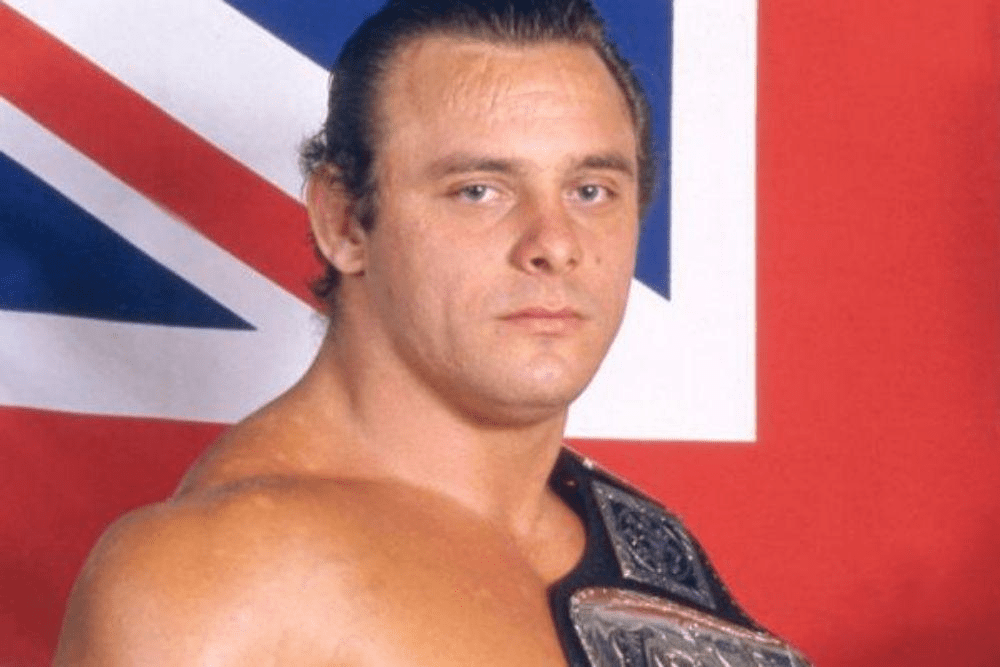
When Dynamite Kid went to Japan, he was like nothing that anyone had ever seen. Quick, crisp, and tough, Kid has been described by Bret Hart as “pound-for-pound, the greatest wrestler who ever lived.”
Trained at the Snake Pit in Wigan, his North American break would come in Canada’s Stampede Wrestling but his most acclaimed work would occur in Japan when he wrestled the similarly agile Tiger Mask.
One encounter, occurring in April 1983, would go down in history when it was the first professional wrestling match to be rated five stars by the Wrestling Observer journalist Dave Meltzer.
In his obituary for Dynamite Kid, he would say of the Brit work with Mask: “Tiger Mask and Dynamite Kid go together like Peanut Butter & Jelly, Magic and Bird, Ali and Frazier, Evert and Navratilova. You say one and it immediately brings up the thought of the other.”
Although Dave Meltzer’s star ratings – as well as the man himself – are a contentious issue today, attaining the five or above rating is still of major importance in today’s industry, with the first such honour going to a British wrestling revolutionary.
Les Kellett: Comedic Clout
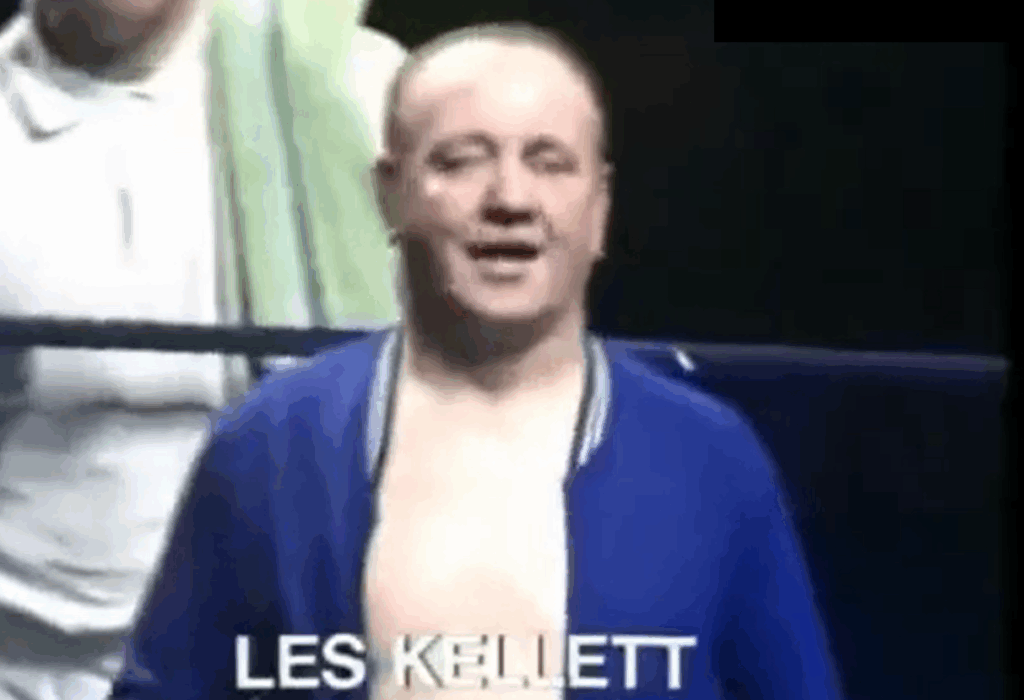
No British wrestler matched wrestling with comedy quite as effectively as Les Kellett.
Although a legitimate tough man that was feared by the wrestlers in the locker-room, on-screen he was a clown, ducking and diving away from moves as if he were intoxicated, much to the bemusement of the fans.
Although a ‘gimmick’ worker, he was still a huge draw, nominated in the 1960s for ITV’s Sports Personality of the Year and one of few wrestlers presented to Prince Philip at the Royal Albert Hall.
The comedy wrestler Colt Cabana, currently working for AEW/ROH, has credited Les Kellett as being a sizable influence on him.
The former NWA World champion and ROH Tag Team champion told Vice, “guys like Les Kellett…were natural comedians…a lot of people don’t know how much psychology there is because there’s such a science behind making people laugh. I really love that aspect of it.”
He has stated that Kellett would be his dream opponent.
Moreover, a talented wrestler who would compete on television well past middle age, the Laisterdyke-born bruiser was the man chosen to train the celebrity wrestler Jimmy Savile.
Talking of which…
Adrian Street: How’s About That Battering, Then?

Savile’s career in wrestling reportedly ended when he was battered by Adrian Street during one 1971 encounter.
Despite the dazzling sequins, vibrant face paint, and ostentatious feather boas, “Exotic” Adrian Street was tough as they come, coming from a family of Welsh miners.
When the bombastic one stepped into the ring with the showbiz star, he made a point of absolutely pounding the Top of the Pops host. Street put Savile in an excruciating submission, dropped him on his head, and tore out clumps of Savile’s thin, wispy hair.
Street later lamented: “I drew it out as long as I could because I was enjoying myself!”
After his death, it was revealed Sir Jimmy had been one of Britain’s most prolific sexual predators, perhaps having as many as 400 victims of ages reaching from 5 to 75.
Three-quarters of victims were under 18, including 28 under 10. Savile is thought to have committed over 30 rapes.
Street later said that had he known the full extent of Savile’s abuse, he would have given him “an even bigger hiding – were that physically possible.”
Dave Taylor: Sutcliffe Suspect

From 1975 to 1981, women were advised not to walk the streets of Yorkshire alone as a hammer-wielding lady killer stalked the streets.
At one point, Jimmy Savile was interviewed. As was another wrestler: Dave Taylor.
The police investigation has been a source of widespread criticism, with the police interviewing the actual killer nine times during the five-year search. The case was also muddied by red herrings, including a tape sent in by a man now known as Wearside Jack, who led police to incorrectly believe the killer had a Geordie accent and not a Yorkshire one.
In the end, after 13 murders and seven further attempted murders, the true culprit – Peter Sutcliffe – was captured by police; albeit
by chance.
Nonetheless, as recalled by William Regal on Twitter, the Yorkshire-born brawler Dave Taylor was once stopped and questioned on suspicion
of being the night-prowling sadist. At the time, he lived in Bradford and was driving home late at night after a show.
Taylor’s stardom was far later than several other British wrestling names, making his ITV wrestling debut in 1986, making his first All Star Wrestling appearance the next year.
Brian Maxine: Rip Her To Shreds

Brian “Goldbelt” Maxine was one of the first British wrestlers to master the art of self-promotion, with one 1970 issue of The Wrestler noting that “never before ha[d] a British champion at any weight gone to so much trouble to “sell” himself to the public.”
Wearing a king’s crown, he would hand out collectibles to attending fans. By 1978, he had the biggest wrestling fan club, sending members his official magazine and signed Christmas cards.
Interestingly, Maxine would train Debbie Harry from Blondie how to wrestle in preparation for her role in the musical Teaneck Tanzi: The Venus Flytrap.
In her memoirs Face It, Harry wrote: “We had a wrestling coach named Brian Maxine who had a massive, muscular, no neck upper body and a perfectly busted up nose. Brian had been a British Champion for years and he was very serious about his job as a coach. For weeks he taught us how to do the holds, make the jumps, take the falls, and do all the different wrestling moves that we did in the show.”
It was not the only musical connection Maxine had as the band Fairport Convention played on his album Ribbon of Stainless Steel.

David Fullam
So love going back and watching British Wrestling on YouTube. Such a great style and presentation.