
Posted on by bdamage1

Robert Segedy
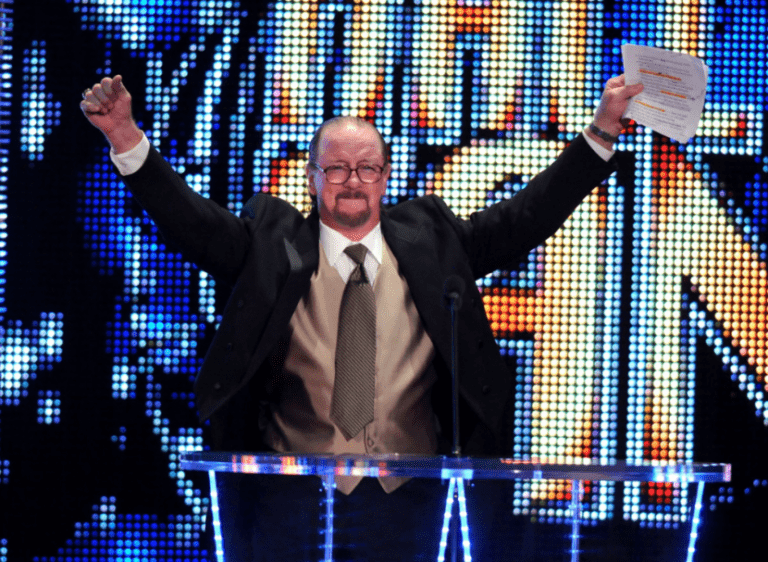
Terry Funk sadly passed away this week and to honor his great legacy is an outstanding essay written by our own Robert Segedy. It was written before he Funk died, but truly captures what a great wrestler Terry Funk was.
“There might be no one in the arena, but if there are only a few people who busted their butts to get there, by God, I’m gonna give them something to take home and say, ‘I got my money’s worth.” Funk speaking to a local ABC reporter in 2016.

In the world of Kayfabe, heroes come cheap and easy; as does various accolades, titles, nicknames, blood, sweat and tears. In a business that prides itself on a false reality, how are we to know who is authentic? How do we peel back all the hype and subterfuge to actually see the truth? After being a serious fan of wrestling for most of my life, I have come to realize that reality is based on perception, and my perception tell me that the list of true heroes is small. Labels are a dime a dozen, something developed by someone behind the scenes; usually a producer or an executive, but occasionally there are exceptions. Which brings to today’s spotlight: Terry Funk, the king of hardcore.

Born June 30, 1944, Funk was one of two sons born to Texas promoter and wrestler Dory Funk Sr. The two brothers, Terry, and Dory Jr., formed a highly successful tag team and held the belts in All Japan Wrestling on numerous occasions. Funk is now considered retired, but he has had a long and illustrious career, wrestling in many organizations as both a face and a heel. “Funk has appeared in the National Wrestling Alliance (NWA), American Wrestling Association (AWA), World Wrestling Entertainment (WWE), World Championship Wrestling (WCW), Extreme Championship Wrestling (ECW), United States Wrestling Association (USWA), Ring of Honor (ROH) and Total Nonstop Action Wrestling (TNA).” (https://prowrestling.fandom.com/wiki/Terry_Funk).

After graduating from High School in Armadillo, Funk headed to West Texas University, now known as West Texas A&M University, where he competed in amateur wrestling and football. Funk began his professional career in 1965 working for his father’s organization. Teaming with his brother often soon led to big money matches and their reputation preceded them. In 1975, Funk defeated Jack Brisco in Miami when brother Dory failed to appear for his title shot. Winning the NWA Heavyweight Championship propelled Funk to stardom and he held on to the title for 14 months whereas he was defeated by Handsome Harley Race in Toronto. The match was discontinued when Funk failed to respond to the referee’s instructions.

In 1981 Funk spent some time in Continental Wrestling Association where he feuded with Jerry “The King” Lawler. This feud concluded with the infamous Empty Arena match that took place at the Mid-South Coliseum in Memphis, Tennessee with only announcer Lance Russell, a cameraman, and a photographer present. Otherwise, the auditorium was empty. The confrontation did not last long as Funk attempted to gouge out Lawler’s eye with a broken piece of a 2 by 4, but the spot backfired when Lawler kicked Funk’s elbow causing him to blind Funk in one eye.

Next, we saw the brothers travelling to Japan where they became fan favorites. Terry really hit his stride here with his brawling ability. The brothers were heels until they found themselves in the ring with the Original Sheik and Abdullah the Butcher; they embraced the fan’s attitude towards them and settled into being babyfaces. The team faced a number of tough combatants such as Stan Hansen, Bruiser Brody and Giant Baba.

After a brief visit to the AWA, Funk made his debut in the World Wrestling Federation in 1985. Funk swiftly dispatched his opponent Aldo Martino, but also saw him opening a can of whoop ass on ring announcer Mel Phillips. Funk’s gimmick now included bringing a flaming branding iron to the ring and used it to “brand” his fallen opponents. A series of heated matches ensued with the Junkyard Dog. In the mid 80’s the brothers were reunited with the addition of a third Kayfabe brother, Jimmy Jack Funk. The trio were managed by Jimmy “Mouth of the South” Hart. The Funk’s found themselves embroiled in a match with Tito Santana and Junkyard Dog at WrestleMania 2. Funk also found himself signed up for a series of matches with Hulk Hogan for the Championship Belt. In 1986 Funk finally left for greener pastures.

In 1989, Funk signed with World Championship Wrestling and became a part of the heel faction, J-Tex Corporation managed by Playboy Gary Hart. Funk began feuding with World Champion Ric Flair after participating as a part of a three-person panel for the match. I can clearly remember this moment because Flair had cleanly pinned Ricky Steamboat for the title in a Clash of the Champions on WTBS. Funk rather rudely interrupted Flair as he was being interviewed and told Funk that he was spending too much time in Hollywood instead of wrestling. Funk then attacked Flair, piledriving the champ through a table, and thus injuring Flair until The Great American Bash 1989. In their title match, Flair was victorious over Funk when he reversed a small package resulting in a pin. Funk alongside Gary Hart and The Great Muta then triple teamed Flair until Sting arrived to help fend off the attackers. Flair then faced Funk in a legendary “I Quit” Match with Funk declaring that he did indeed quit after Flair applied the Figure Four Leglock. This match received a five-star rating from Dave Meltzer in the pages of the Wrestling Observer newsletter. A notable moment in the feud occurred when Funk used a plastic bag to suffocate Flair on television after Flair and Sting had secured a victory over Muta and Dick Slater. Funk soon after hosted his own interview segment Funk’s Grill where a tuxedo clad Funk interviewed both Faces and Heels. Funk soon announced one of his frequent retirements and took a much-needed break from wrestling.

During his various interims from in ring action Funk has appeared in several Hollywood productions including 1989’s Road House directed by Rowdy Herrington. He also was the focus of Barry Blaustein’s wrestling documentary Beyond the Mat (1999) where the cameras captured the physician in attendance informing Funk that he would never walk again without intense pain. Always busy Funk had also authored a biography entitled More Than Just Hardcore (2013). In 1994 Funk returned to ring action by rejoining WCW where he wrestled Tully Blanchard to a double disqualification at Slamboree 1994. Afterwards he joined Colonel Robert Parker’s Stud Stable alongside fellow heels Bunkhouse Buck, Arn Anderson and Meng.
Funk becomes Hardcore

On August 20, 1995. IWA held a King-of-the-Death-Match tournament in Kawasaki, Japan. Funk endured three savage matches that featured a number of extreme gimmicks including ladders, thumbtacks, and barbed wire. In the final match, Funk faced off against Mick Foley as Cactus Jack, in an exploding ring, C4 explosives, and barbed wire. I recall ordering this tape from a grey market vendor because I had to see it. Funk lost to Foley, but the two men bonded over the experience. Funk had promised to help out fledgling startup Eastern Championship Wrestling (later renamed Extreme Championship Wrestling) and this ushered in Funk’s time as a hardcore wrestler. Funk faced many of the bigger names in ECW including bouts with Cactus Jack, Shane Douglas, The Sandman, Sabu, and the man that would eventually become Funk’s protégé, Tommy Dreamer.

ECW had their first Pay Per View event Barely Legal on April 13, 1997, with Funk headlining against the Heavyweight Champion Raven. Earlier that night Funk had defeated The Sandman and Stevie Richards in a winner qualifies for a title shot against Raven. Funk was successful and he was awarded the title. On August 9, 1997, Funk and Sabu met up in Born to be Wired, an unbelievable match that featured no ropes around the ring but with barbed wire strung around the ring. Both men were a bloody mess by the conclusion of the match and both men needed to be cut out of the wire with clippers. Sabu sustained a serious injury with a serious gash to his biceps; he refused to stop and had his manager Bill Alfonzo wrap the wound with medical tape so he could proceed. Talk about tough!

In September of that year Funk was featured on “WrestleFest – 50 Years of Funk” in his hometown of Amarillo where Funk squared off against WWF World Champion Brett Hart. Paul Hayman presented Funk with a belt that was paid for by donations from the ECW wrestlers and declared him the Lifetime ECW World Heavy weight champion. 3 months into yet another announced retirement Funk was signed by the WWF as Chainsaw Charley in 1997. Foley and Funk teamed with each other in an assortment of tag team matches usually against the team of The New Age Outlaws.

Funk returned to ECW in 1998 and started a feud with Tommy Dreamer but once again retirement called, and he left before the two could meet in the squared circle. In 2000, Funk returned to WCW, and he won the WCW Hardcore Championship three times, a company record. He also won the WCW United States Heavyweight Championship for the second time.

Funk has had a surprisingly lengthy career; he was one of six men inducted into each of the WWE Hall of Fame, the WCW Hall of Fame, the Professional Wrestling Hall of Fame, the NWA Hall of Fame, and the Wrestling Observer Newsletter Hall of Fame. Despite the numerous retirement matches throughout his career, Funk has been quotes as saying “I never really truly will retire.” Last year I was fortunate enough to send him a fan letter and I received a personal reply from the man himself.
Ric Flair had reported that Funk had returned home after being checked into a nursing home with early onset dementia. I have read recently that both Tommy Dreamer and Mick Foley have visited the legend and that he is doing remarkably well. In my book, Funk is one of a kind: a true warrior who has sacrificed his well being for the sake of performing. Long may he reign.
*Rest in Peace Funker*
