Brian Damage
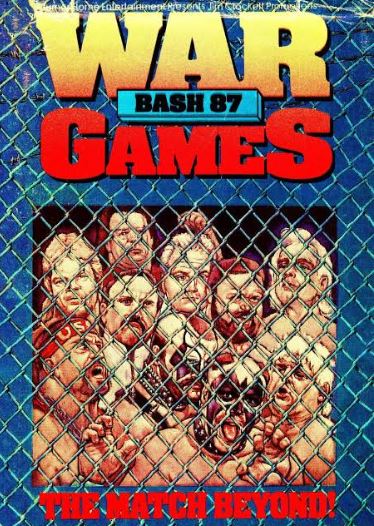
As fans, we are all aware that Wargames has become a tradition during the Survivor Series event every November for WWE. For some of the younger fans out there, Wargames was not a Triple H/Vince McMahon idea. It did not originate in NXT or WWE at all, but from their once longtime rivals in the National Wrestling Alliance (NWA) way back in 1987. This is the story of how Wargames came to be…
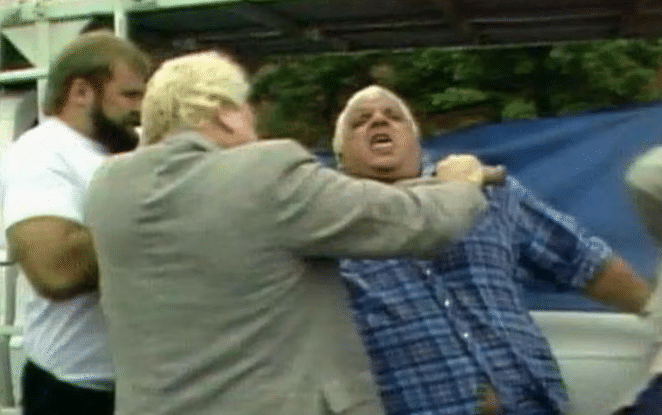
The concept actually started back in 1985 from then NWA/Jim Crockett Promotions booker ‘The American Dream’ Dusty Rhodes. Dusty had booked himself as the centerpiece in a long, violent feud with the Four Horsemen. A feud which often saw Dusty outnumbered and “kayfabed” injured multiple times including a “broken” ankle and arm during separate attacks by the Horsemen. The feud was red hot for Jim Crockett Promotions with the Horsemen usually coming out on top some which way or form.
The feud saw Dusty battling the faction individually and at times teaming with various tag partners. Rhodes wanted their bitter and oftentimes bloody feud to culminate in a big time match. Thoughts raced in his head of having a steel cage match and or an I quit match.It all came together for Dusty in the Summer of 1985 after going to the movies. On this particular evening Dusty went to see the Mel Gibson, Tina Turner film called Mad Max: Beyond Thunderdome.
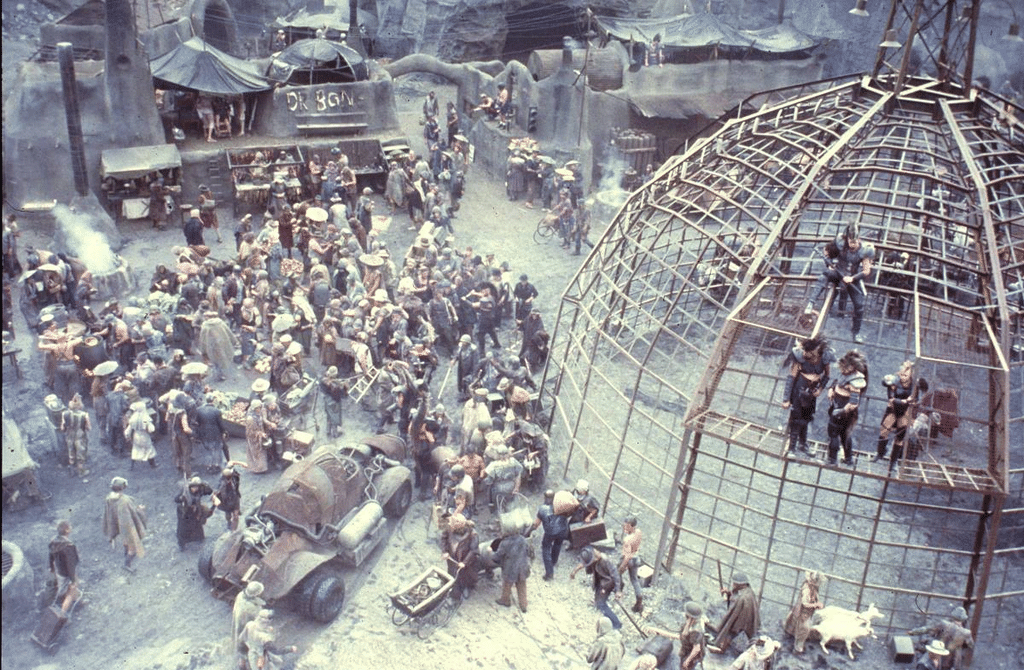
It was the scenes involving the Thunderdome that heavily inspired Dusty Rhodes to mimic and bring to the NWA. The Thunderdome was a caged arena where gladiators battled until the death. hodes saw this as the perfect idea to cap off his years-long feud with the Four Horsemen. That night after the movie ended, Dusty went to work on how he could bring the Thunderdome gimmick to the NWA. Dusty said he sat in a dark parking lot, took a couple of pieces of paper and began drawing what he wanted his version of the Thunderdome to look like.
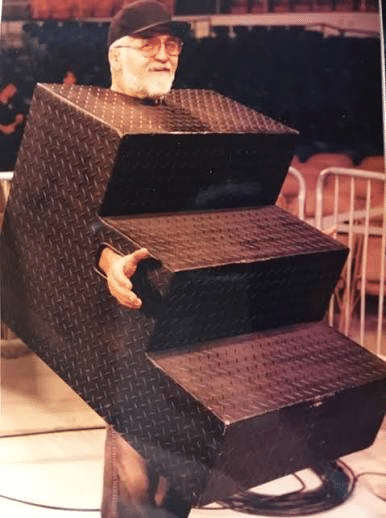
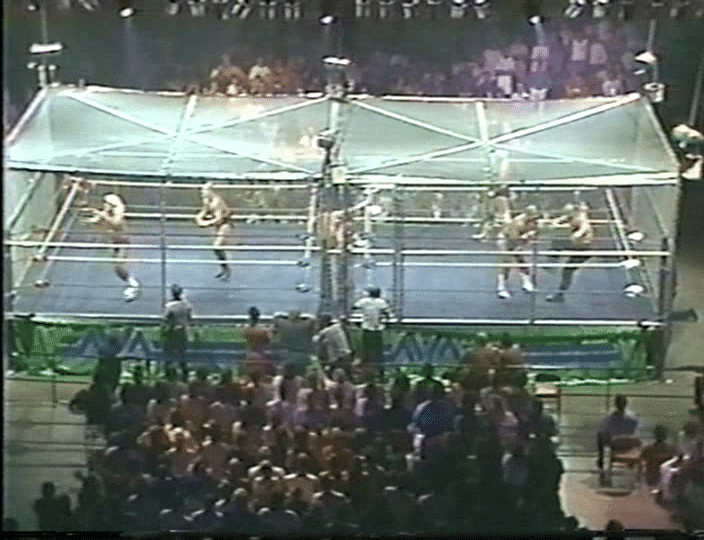
After drawing out his vision, he immediately drove to his friend, a former wrestler and head of the JCP ring crew Klondike Bill and showed him his sketches. The two sat on a curb on the sidewalk with a flashlight in the dead of night and discussed if Dusty’s idea could actually become a reality. Dusty wanted not one, but two wrestling rings together with an enclosed steel cage surrounding it. Klondike Bill was up to the task of creating Dusty’s vision, but warned him that when it was time to assemble the cage during the show, it would probably take about an hour to put together.
An hour to wait between matches wasn’t going to work, so Dusty had the idea to assemble the cage before the show even started and have it hang from the rafters. When the match was ready to happen, the cage would descend from the ceiling and onto the double ring. Klondike Bill thought the idea was absolutely crazy, but Klondike was just as crazy and ambitious and was up to the challenge.
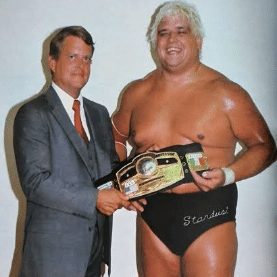
The biggest hurdle came when Dusty had to present his idea to the head of Jim Crockett Promotions in Jim Crockett Jr himself. Rhodes said that Crockett had serious doubts and concerns about hanging a double cage high above the ring during a show, but leave it to Dusty to sway Crockett and convince him that this would work and was a million dollar idea. It helped that Dusty had over two years to build this structure and continue to build his storyline with the Four Horsemen.
Fast forward to 1987 and the time was right to finally put an exclamation point onto the feud between Rhodes and the Four Horsemen. His cage match idea would be the ultimate culmination of two years of violence wrapped into one single match. The match would consist of a 5 on 5 match. 2. The match began as a 5 minute 1 on 1 period between one wrestler from each team. 3. Every 2 minutes a new wrestler entered. A coin toss would decide who got to enter the cage first and have the advantage during the contest. The match wouldn’t become official until all 10 men were inside the structure. There were absolutely no pinfalls, disqualifications or count outs. If you decided to leave the cage via the door, you would forfeit the match. The only way to win was by submission or making the other team say I quit.
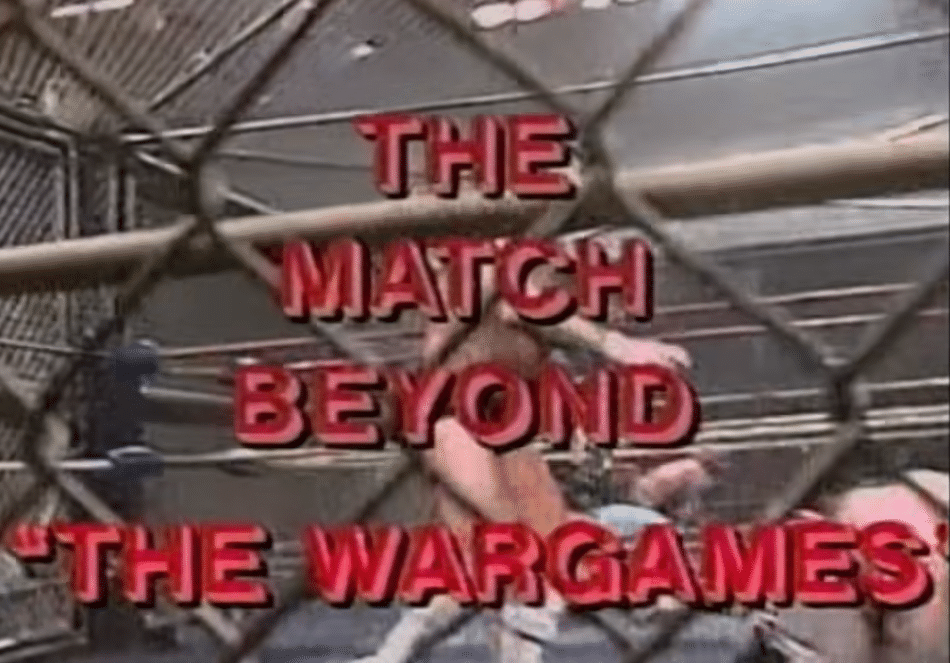
The two teams booked for this match were the team led by Dusty and included Nikita Koloff, the Road Warriors (Hawk and Animal) and their manager Paul Ellering against The Four Horsemen of Ric Flair, Arn Anderson, Tully Blanchard, Lex Luger and their manager JJ Dillon. A huge match like this needed a bigtime name and Rhodes wanted it to have a sort of apocalyptic sound to it. Once again, he referenced a movie to get just the right name for this epic encounter. Dusty borrowed the name Wargames from a 1983 film of the same name and added “The Match Beyond” from his initial inspiration from the Mad Max movie.
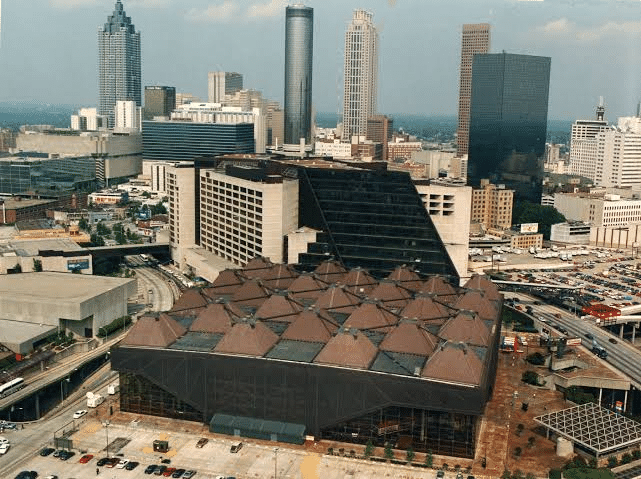
Wargames was booked on July 4th, 1987 during the Great American Bash tour at what Arn Anderson called the “Madison Square Garden of the South” in the Omni in Atlanta, Georgia. All the wrestlers involved in Wargames got to look at the structure and do a walk through and there were instant concerns because the roof of the cage seemed a little too low. Some wrestlers feared smashing the top of their heads on the roof if they decided to utilize the top rope. Despite some concerns, there was an excitement about the concept and the originality of it all.
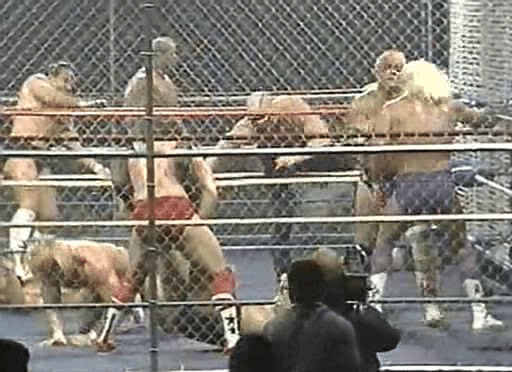
Those concerns would eventually hold true while during the match, Horsemen manager JJ Dillon was nearly paralyzed due to the low lying roof of the Wargames cage. The Road Warriors lifted Dillon for their Doomsday Device finisher. Hawk jumped from the ropes to clothesline Dillon from Animal’s shoulders and did not get a full force jump because of the low ceiling. Dillon landed extremely awkwardly on his head and shoulder narrowly avoiding breaking his neck. Dillon did suffer a dislocated shoulder and neck injury and was in immense pain.
Realizing that Dillon was in a lot of pain and unable to continue, Paul Ellering ran in and used a spike to the legitimate screams of pain from Dillon and he quit leading Dusty’s team to victory. JJ Dillon was praised after the match for taking the bump and dealing with the pain to finish the match. Ellering said that the Road Warriors felt horrible afterwards for injuring the well respected Dillon.
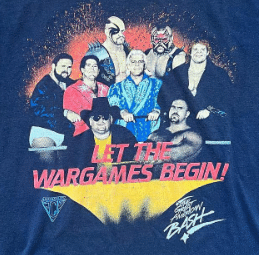
Wargames was a financial success for the NWA and had over 16,000 fans pack the Omni to see it. Crockett was so impressed by Wargames success that he booked it for the remainder of the Great American Bash tour where the match did fantastic business. THe Wargames match was a hit and recycled for the Bash tour the very next year. Unfortunately, while the Wargames match did very good business for Crockett and company, it wasn’t enough to save him from losing so much money and he was forced to sell his promotion to Ted Turner.
