Joe King
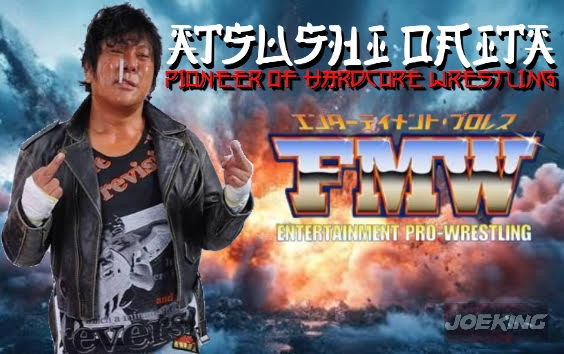
Revered by fans and feared by opponents, Onita didn’t just wrestle—he changed the industry forever.
Early Years & Setbacks
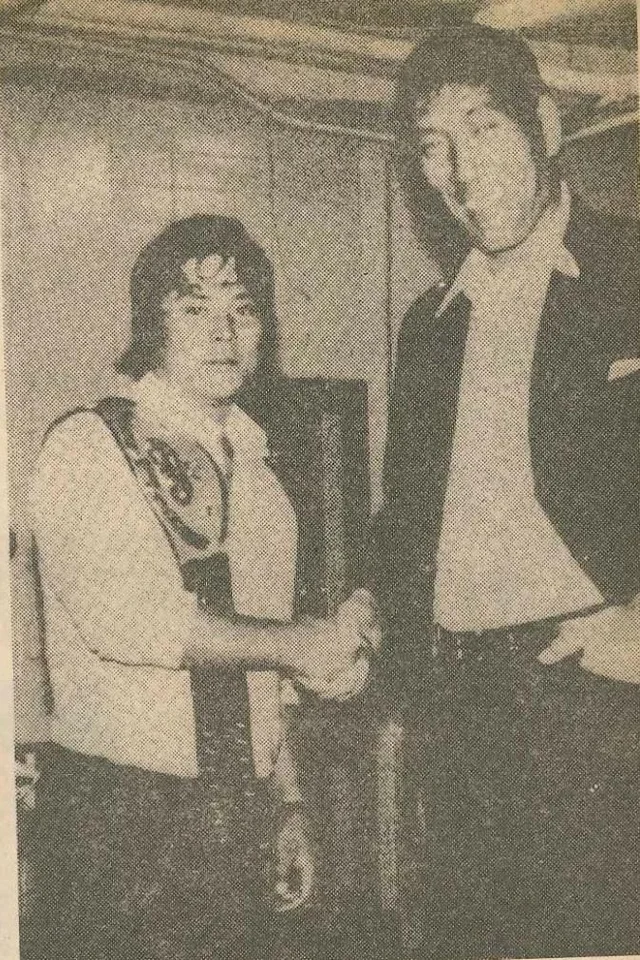
Atsushi Onita began his career in 1974 training under Giant Baba and becoming the first graduate of the All Japan Pro Wrestling dojo. Touted early as a promising junior heavyweight, Onita’s rise was abruptly halted by a devastating knee injury. Doctors told him his wrestling career was over, forcing him into early retirement before he ever reached his potential. But Onita wasn’t done. He moved to Amarillo, Texas and began training under Terry Funk & Dory Funk Jr. From there he wrestled in Memphis for Continental Wrestling Association where he became a 3-time AWA Southern Tag Team Champion with Masnobu Fuchi. He also won the NWA International Junior Heavyweight Championship while working for Mid-Atlantic Championship Wrestling. One night in September of 1981, Onita and Fuchi were involved in a wild concession stand brawl in Tupelo, Mississippi with their opponents, Ricky Morton & Eddie Gilbert. They used chairs, trash cans, condiment containers, tables, kendo sticks, and anything else they could use as weapons. Onita took this hardcore element, along with the bloody brawling style used in Memphis, over to Japan as it was the influence to his creation of Frontier Martial-Arts Wrestling.
The Birth of FMW
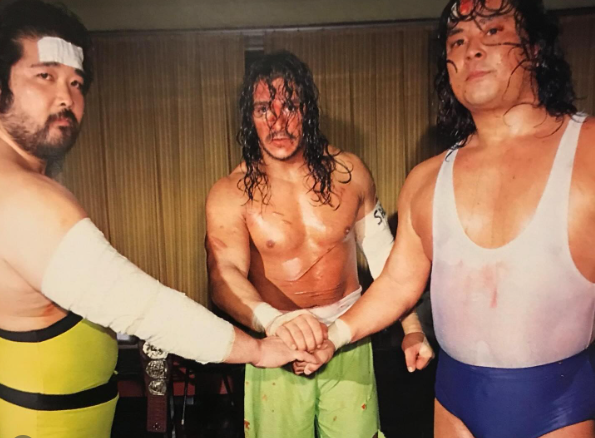
In 1989, Onita shocked the Japanese wrestling world by returning—this time as something entirely new. He founded Frontier Martial-Arts Wrestling (FMW) and introduced a violent, gritty style inspired by American deathmatch wrestling. Barbed wire. Explosions. Fire.
Onita embraced pain and chaos like no one before him. He helped further introduce the following stars to audiences worldwide: Mike Awesome, Sabu, Hayabusa, Horace Boulder, Kenta Kobashi, The Great Sasuke, Mr. Pogo, and Taka Michinoku.
Exploding Barbed Wire Deathmatches
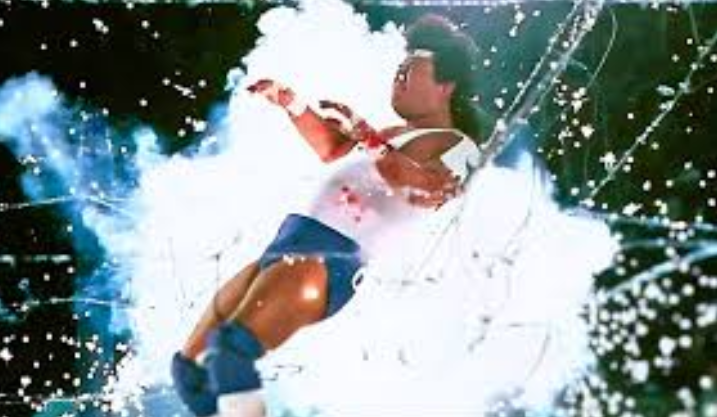
Onita became synonymous with the Exploding Barbed Wire Deathmatch, a spectacle so dangerous it bordered on the unthinkable. These matches turned him into a cultural icon in Japan, selling out stadiums and drawing mainstream media attention. His legendary rivalries with Terry Funk, Cactus Jack, Mr. Pogo, and Hayabusa defined an era. Onita wasn’t just fighting opponents—he was battling the ring itself.
Global Influence
Onita’s impact stretched far beyond Japan. His deathmatch philosophy helped shape modern hardcore wrestling. He inspired wrestlers like Sabu, Terry Funk, and Mick Foley. Without Onita, modern hardcore wrestling simply doesn’t exist.
FMW and ECW held a supershow at Korakuen Hall in Japan. In a continuation of the working relationship between FMW and Extreme Championship Wrestling, ECW promoter Paul Heyman sent eight members of the ECW roster to participate on the 1998 Year End Sensation tour. Onita and Sabu held a retirement ceremony the night before the event for The Sheik. Sabu would also be married to his wife Mibu in a traditional Japanese wedding cermony on this tour as well.
Shawn Michaels made a notable special guest referee appearance at their 10th Anniversary Show on November 23, 1999. He officiated the main event between Hayabusa and Mr. Gannosuke (disguised as Hayabusa) at the Yokohama Arena.
Championships & Mainstream Fame
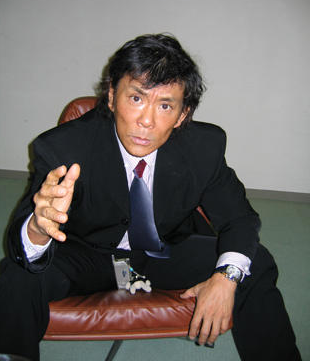
Onita was a multiple-time FMW Brass Knuckles Heavyweight Champion and one of the biggest draws in Japanese wrestling during the early 1990s. At his peak, he filled baseball stadiums and appeared on television shows, movies, and political platforms. In one of wrestling’s most surreal chapters, Onita was elected to the Japanese House of Councillors, proving just how far his influence reached beyond the ring. In 2001, he won the 19th House of Councilors election as a representative of the Liberal Democratic Party, following Antonio Inoki and Hiroshi Hase to a seat in the Japanese Diet. After his retirement from politics, he lent his name and image to a Nintendo DS game, Atsushi Onita’s Political Quiz.
Retirements, Returns & Legacy
True to his rebellious nature, Onita “retired” multiple times—only to return again and again. Even decades later, he continues to make special appearances, mentor younger wrestlers, and remind fans that his spirit never left the business.
The Godfather of Hardcore
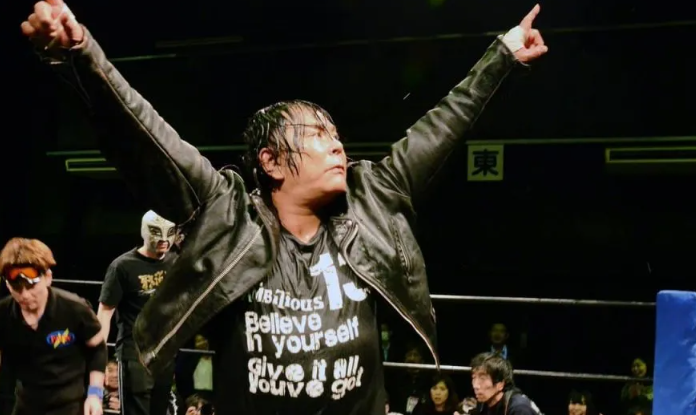
Love him or hate him, Atsushi Onita is undeniable. He took what many believed was wrestling’s darkest edge and turned it into an art form—one fueled by sacrifice, spectacle, and sheer willpower.
Dan Mitchell
Couple of errors.
“introduced a violent, gritty style inspired by American deathmatch wrestling”
It was the other way round – there was no “American deathmatch wrestling” until after FMW formed, the closest being ECW.
FMW didn’t “further introduce” Kenta Kobashi. He had one match there and was a megastar in Japan years before.
Richard Gadberry
“I believe it’s pronounced ‘ECW’?”–Vince McMahon.